


Why Quiet Progress Is Real Progress for Neurodivergent People

Integration Over Intensity: Why Sustainable Growth Looks Quiet
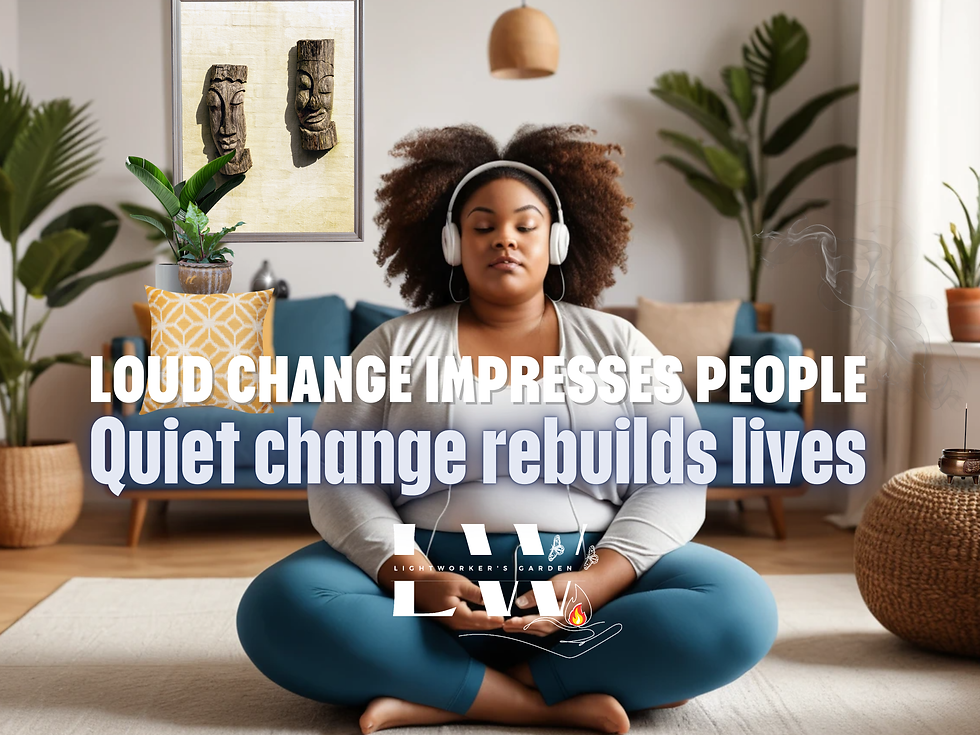
If your growth doesn’t look dramatic, visible, or externally impressive right now, it may still be real, measurable, and deeply transformative. Neurodivergent progress is often quiet before it is visible. This article will help you recognize it, respect it, and continue it.
Not all progress announces itself.
Not all change is loud.
Not all transformation is public.
For many neurodivergent adults (ADHD, autistic, combined type, high-functioning, high-masking), the most important growth seasons are almost invisible from the outside.
And tragically, those are the exact seasons people are most likely to judge themselves as “falling behind.”
Let’s correct that lens.
This article directly answers:
What quiet progress looks like for neurodivergent people
Why ND growth is often invisible before visible
How ADHD and autistic adults grow differently
Why integration phases feel slow but are essential
Whether slow progress still counts
How to measure non-visible progress
Why intensity cycles lead to burnout
How to build sustainable growth rhythms
How to honor internal change before external results
“Loud change impresses people. Quiet change rebuilds lives.” -- Michele Thompson
The Progress Nobody Applauds
There are seasons where nothing looks impressive on paper.
You’re not launching.
Not announcing.
Not scaling.
Not performing at peak output.
Instead, you’re:
Restructuring routines
Learning your nervous system
Reducing overload
Unmasking slowly
Telling more truth
Saying no more often
Resting without apology
Rebuilding internal trust
Externally, it looks like less.
Internally, it is everything.
For neurodivergent people, especially, progress often begins with removal before addition.
And removal is quiet.
Why Neurodivergent Growth Is Often Invisible First
Integration Happens Before Expansion
Neurotypical productivity culture measures:
output
speed
visibility
scale
metrics
Neurodivergent growth often measures:
regulation
tolerance
recovery time
honesty
boundary strength
identity clarity
One is loud.
One is foundational.
Without integration, expansion collapses.
Many ND adults learn this the hard way through repeated burnout cycles:
intense push → crash → rebuild → repeat.
Quiet integration breaks that cycle.
The ADHD / HFA Intensity Trap
Many ADHD and HFA individuals are capable of extraordinary intensity bursts:
hyperfocus sprints
all-night builds
creative surges
deep research dives
rapid system construction
These feel powerful — and they are — but they are not always sustainable.
Intensity can produce results.
Integration produces longevity.
Intensity says:
“Now!”
Integration says:
“Still.”
This article builds directly on:
Why Motivation Fails Neurodivergent Minds
Self-Hypnosis and CBT for ADHD Minds
Reasons vs Excuses: Neurodivergent Truth About Explanation
Choosing One Thing: The Spiritual Power of Simplification
Those articles establish: regulation → momentum → self-trust → accountability
This article establishes: sustainability.
Signs You Are Making Quiet Progress (Even If It Doesn’t Look Like It)
You Recover Faster From Overwhelm
Recovery time shortening is progress.
You Notice Dysregulation Earlier
Earlier awareness = earlier intervention = growth.
You Say “No” Without Explaining Yourself for 20 Minutes
Boundary efficiency is progress.
You Need Less Masking to Function
Authenticity tolerance is progress.
You Adjust Systems Instead of Blaming Yourself
Structural thinking is progress.
You Choose Regulation Before Urgency
That is major progress.
How To Measure Quiet Progress
Instead of asking:
“What did I produce?”
Ask:
Regulation
Did I regulate before pushing?
Recovery
Did I shorten recovery time?
Responsiveness
Did I adapt instead of a shame spiral?
Reality
Did I honor real limits?
Rhythm
Did I work with my cycle instead of against it?
That is measurable progress.
Myth vs Reality — Quiet Growth
Myth: If progress isn’t visible, it isn’t real
Reality: Internal restructuring always precedes sustainable external change
Myth: Slow means failing
Reality: Slow often means integrating
Myth: Consistency must be intense
Reality: Consistency is rhythmic, not dramatic
FAQ
Why does my progress feel slow compared to others?
Neurodivergent growth often includes regulation and integration layers that are invisible but necessary. Comparing visible output without accounting for internal work creates false conclusions.
Is slow progress still real progress?
Yes — if regulation, awareness, and structural adjustment are improving, progress is occurring even without visible milestones.
How do I avoid burnout cycles?
Shift from intensity metrics to regulation metrics. Measure recovery, not output spikes.
Am I lazy if I choose a slower pace?
No. Sustainable pacing is not laziness — it is neurological intelligence.
Closing Reflection
Quiet progress prepares the ground for visible movement, especially as we approach the March eclipse window and Worm Moon release cycle. What you’ve been integrating beneath the surface, regulation, honesty, new rhythms, gentler boundaries, is not wasted time. It is the soil being turned, the roots strengthening before the next season of growth.
Neurodivergent transformation is rarely loud at first; it matures in the unseen places where safety is rebuilt, and self-trust is restored.
As momentum begins to stir in the months ahead, you may notice that action feels less forced and more aligned, not because you pushed harder, but because you honored the quiet work that made movement sustainable.


